 Jeff Utecht
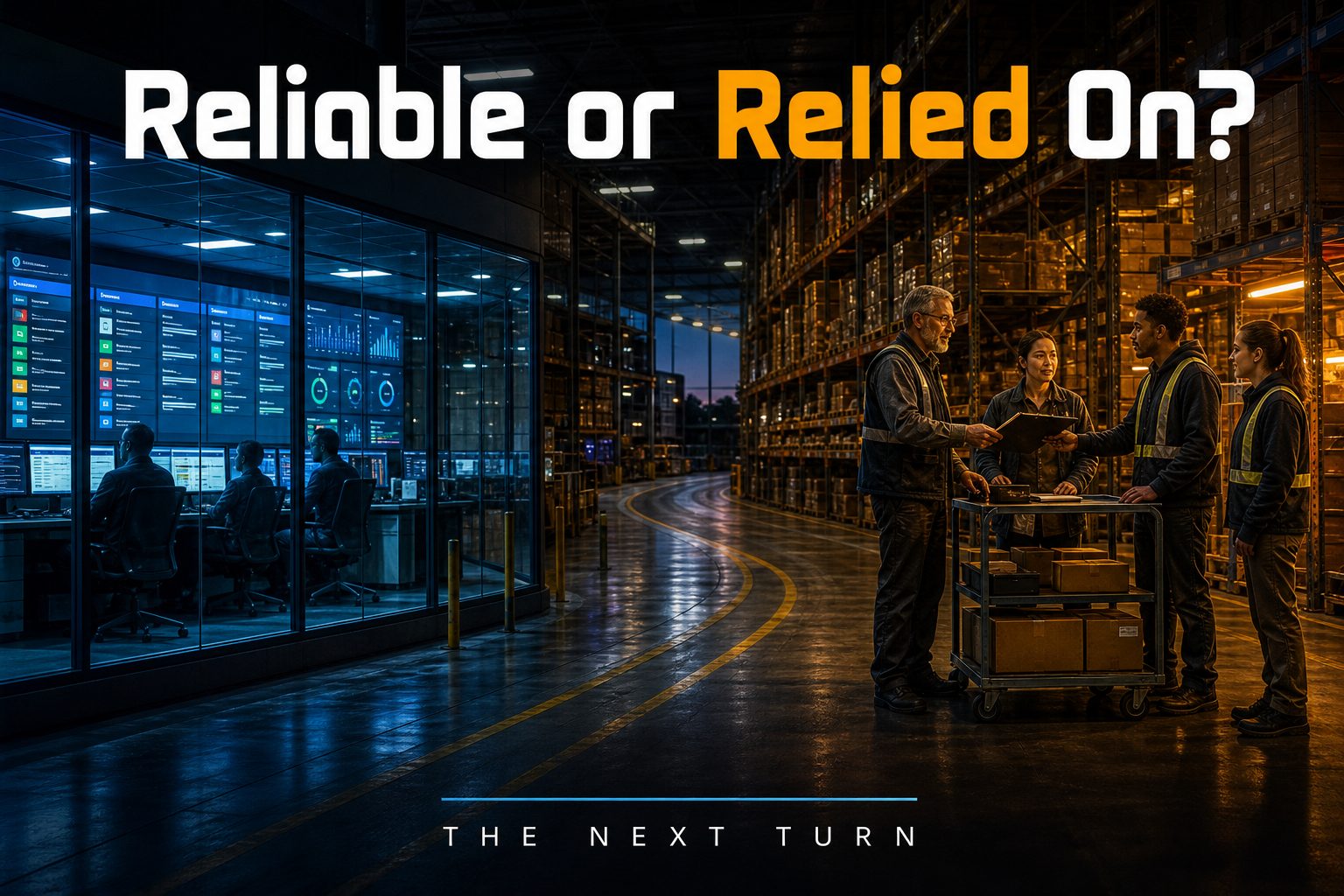
Every team has one. The person who always answers. The one who knows where the file lives, how the old system really works, and who to call when something breaks at 4:55 on a Friday. Leaders love reliable employees, and they should. But a set of experts writing in Fast Company this week made a point I think every leader needs to hear: the way many organizations reward reliability is quietly turning their best people into a single point of failure.
That is not a people problem. It is a design problem.
And it sits right where the two turns I write about in The Next Turn meet: people are redefining what a fair exchange at work looks like, while the structure of work is making it possible to hold more than one role at a time.
Key takeaways
- Reliability is a standard every organization needs. Depending on one person to deliver it is a signal, and a fragile one.
- When reliability is rewarded with more work instead of more opportunity, the value exchange breaks, and reliable employees stall or leave.
- New research on “parallel work” suggests many people already hold more than one role, so dependability has to come from clarity and systems, not constant presence.
- Leaders can protect reliable people by documenting the work, naming backup owners and turning dependability into growth.
What’s happening
On October 21, 2026, Fast Company published “The hidden cost of being the ‘reliable one’ at work”, a roundup in which seven leaders and consultants describe what happens when an organization leans too hard on its most dependable people. Their examples are uncomfortably familiar. An engineer builds a core system alone, without documentation, and it breaks the moment he goes on vacation. A long-tenured sales rep becomes the go-to for customer service, IT and finance, until routine requests crowd out meaningful work and his growth stalls. A facilitator who keeps delivering is told, when he asks about a more advanced role, that he is too valuable where he is.
A few lines from the piece stuck with me. Lena McDearmid of Wryver: “It isn’t noble to be the one person a system can’t run without. It’s a countdown.” Elizabeth Boyd of TalentLab.Live: “Your effort becomes unseen because it’s what’s expected of you.” And AlexSandra Sisler of EmpowerServe: “Being the reliable person can become a disadvantage when reliability is rewarded with more work instead of more opportunity.” The article also points back to earlier Harvard Business Review research on “collaborative overload,” which found that 20% to 35% of value-added collaboration came from just 3% to 5% of employees, and that those people had the lowest engagement and career satisfaction scores measured.
Three days earlier, on October 18, Fast Company’s Sarah Bregel reported on the rise of “parallel work”, where people hold two or more roles at once, sometimes inside the same company and sometimes across different ones. Citing research from Intch, a platform that connects professionals with part-time roles and analyzed the career histories of more than 142,000 people, the article reports that the share of workers who have held multiple roles at the same time rises from about 29% of Baby Boomers to 44% of Gen X, 64% of Millennials and 59% of Gen Z. The piece notes that parallel work once had to be hidden and is now more openly accepted, and that recruiters may need to rethink résumés with many positions, which the Intch research argues can signal “depth” rather than “drift.”
Put the two stories side by side and a tension appears. Many organizations still build dependability around a few individuals who are always there. Meanwhile, more and more people are building working lives in which they are not always there for any single employer.
Why reliable employees are a structure-of-work question
When I talk about the definition of work, I mean what people believe work is for and what it should give them in return. When I talk about the structure of work, I mean how work actually flows: who does which tasks, with what tools, and how the organization knows it got done. This story touches both.
Start with the definition side. In Chapter 5, “The Value Exchange (The 3-Year Problem),” I argue that retention is a design problem, not a motivation problem, and that leaders need to stop confusing endurance with commitment. The reliable employee in the Fast Company examples is enduring. They are absorbing more, covering more, catching more. If the return on that is simply more of the same, the exchange stops making sense. Some of those people will leave. Others will stay and stop growing. Neither outcome is a loyalty failure on their part.
Now the structure side. In Chapter 13, “Building a Shared Definition of Good Work,” I separate standards from signals. Standards are what the organization actually needs. Signals are the visible cues we use to infer them. Reliability is a standard. It is one of the most important ones. But “the person who is always there and always says yes” is a signal, and it can hide real risk.
Reliability is the principle. Sitting at a desk for a fixed number of hours was one signal.
The Next Turn
Being the one person who holds the passwords, the context and the workarounds is another signal. It looks like reliability. Underneath, the organization has handed one person the job of being its memory.
Chapter 10, “Fractional Work and the Unbundling of Jobs,” takes this one step further. The full-time role has always bundled many kinds of tasks together. The parallel-work data suggests that bundle is loosening, whatever leaders think of it. When people may be working across more than one role, dependability cannot rest on constant presence. As I put it in that chapter, “Reliability may come from clarity rather than presence.” Continuity has to come from systems, not from individuals.
This is not about any one generation. The Intch figures show parallel work across every age group the research describes, and the reliable-one pattern in the Fast Company examples shows up in long-tenured staff as much as anyone. The question is not who the reliable person is. The question is what the organization has built around them.
What this reveals about how we reward reliability
Here is the reversal I keep coming back to. Organizations say they value reliability. Then they reward it with volume. The most dependable person gets the extra project, the struggling colleague, the late request. Over time, the reward system teaches everyone else a lesson: being visibly capable earns you more load, not more growth.
Leaders do not do this because they lack care. They do it because the reliable person is the fastest path to getting something done today. That is the trap. A shortcut that works every time stops looking like a shortcut. It starts looking like the system.
It also connects to AI. As more routine work moves into tools and platforms, the knowledge that holds a workflow together can become even harder to see. If that knowledge lives in one person’s head and one person’s prompts, the organization has not reduced its dependence. It has hidden it.
Your next turn
Here are five moves you can make this week:
- Run the vacation test. For each critical workflow on your team, ask: if the person who knows it best were out for a week, what would stop? Write down the answer before anyone has to find out the hard way.
- Name a backup owner. For every workflow that fails the test, assign a second person and give them real time to learn it. This is an investment in your reliable person, not a vote of no confidence.
- Separate the standard from the signal. Write one sentence describing what reliability actually means for a role on your team. Then check whether you are rewarding that, or just rewarding availability.
- Turn dependability into opportunity. In your next one-on-one with your most relied-on person, ask: “What would you stop doing if someone else could own it, and what would you want to grow into?”
- Assume people may hold more than one role. Design handoffs, documentation and decision rights so the work stays reliable even when the people doing it are not always in the same place at the same time.
Frequently asked questions
Why do reliable employees burn out or leave?
When reliability is rewarded with more tasks rather than more growth, the exchange stops feeling fair. Experts quoted by Fast Company describe dependable people whose extra effort becomes the baseline and goes unnoticed. Over time, they stall, burn out or look elsewhere.
What is key-person risk, and how do managers reduce it?
Key-person risk is what happens when critical knowledge or control sits with one individual, so the work fails if they are unavailable. Managers reduce it by documenting workflows, naming backup owners, rotating responsibilities and watching workloads, so the organization could run for a week without any single person.
How should leaders think about parallel work?
Parallel work means holding two or more roles at once. Recent Intch research reported by Fast Company suggests it is common across generations. Instead of treating it only as a loyalty question, leaders can treat it as a design question: build clarity and systems so reliability does not depend on someone always being present.
The standard stays. The proof changes.
Reliability still matters. It may matter more than ever, because so much of how work happens is shifting under our feet. What has to change is how we build it. Not one heroic person carrying the system. A system that is clear enough for people to carry together.
That is a leadership job. It does not happen by accident, and it does not happen by asking reliable people to give a little more.
If you want more on how leaders are rethinking the signals they rely on, you can find related posts on the Next Turn blog.
So here is the question I would sit with this week: if your most reliable person disappeared for a week, would your team discover a system, or a countdown?
Sources
- The hidden cost of being the ‘reliable one’ at work — Fast Company, October 21, 2026
- ‘Parallel work’: How holding down multiple jobs at once shed its taboo — Fast Company (Sarah Bregel), October 18, 2026
