 jutecht
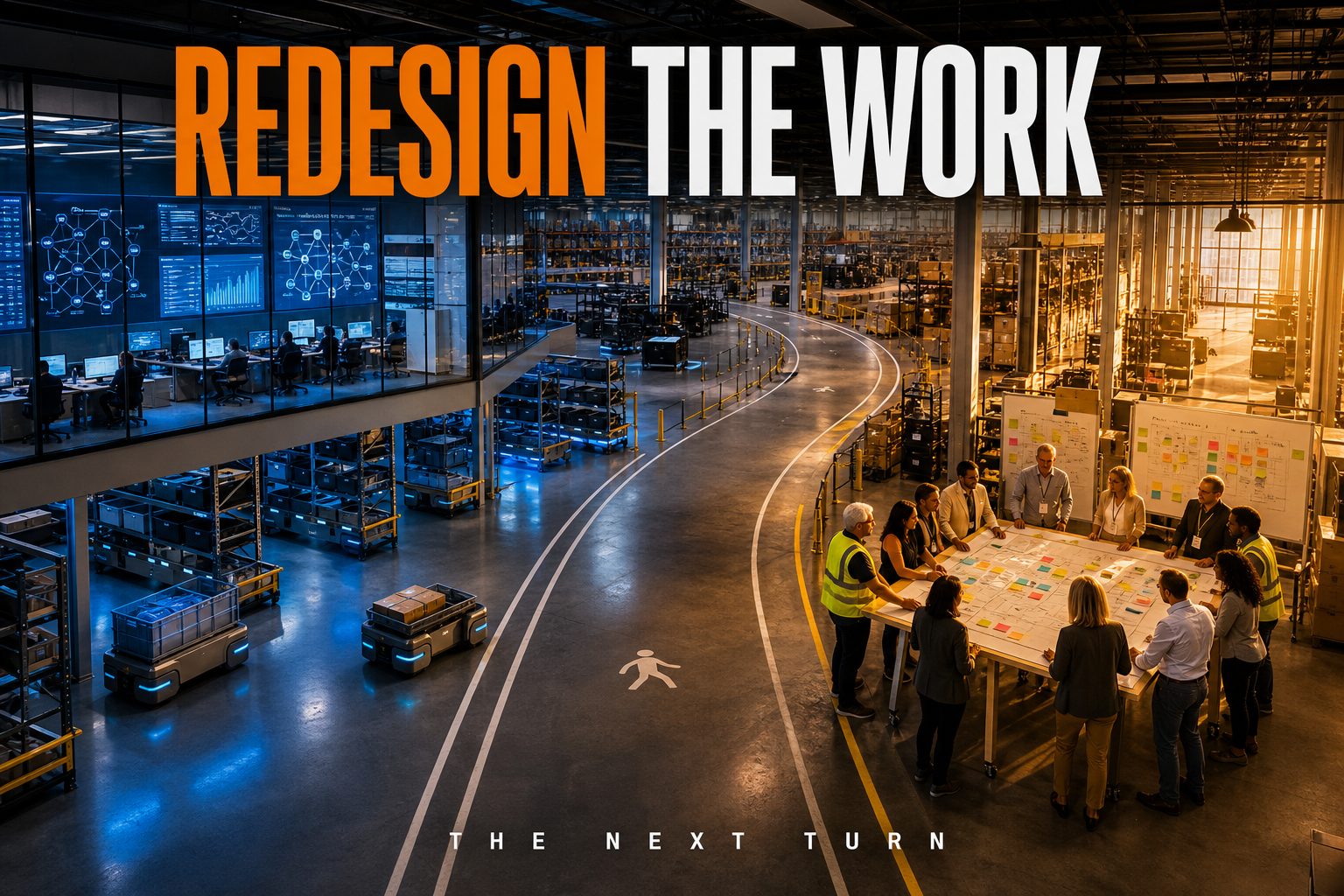
Most organizations still treat AI the way they treated a new software rollout. Buy the licenses. Run the training. Track adoption. But this week’s research points to a different reality: AI work redesign is not a technology task. It is a leadership task, and it changes what a job even is.
Three new pieces of research and reporting, from a labor law firm, an MIT researcher and Gartner, arrive at the same place from different directions. The unit leaders need to manage is shifting. It is moving from the role to the system the role sits inside.
That is a bigger shift than most AI plans account for.
Key takeaways
- A Littler survey released September 29 found only 9% of employers feel “very prepared” to manage labor relations issues from AI adoption, while 67% expect AI to reshape job responsibilities.
- Gartner says organizations must make continuous work redesign a core capability to sustain AI-driven transformation, rather than redesigning work once and moving on.
- When AI changes the structure of work, jobs start to unbundle into tasks, and leadership shifts from managing roles to designing systems.
- The most useful first step is not a new tool. It is tracing one workflow and deciding, explicitly, which work belongs to people and which to AI.
What’s happening: roles are being reshaped faster than plans
On September 29, the employment law firm Littler released its 2026 Labor Survey Report, based on 665 in-house lawyers, HR professionals and business executives. Only 9% said they feel “very prepared” to manage labor relations issues from AI adoption. Respondents said increased AI use will reshape job responsibilities (67%), redistribute work across teams (42%) and reduce entry-level roles (30%). Yet only 17% of employers are communicating proactively and consistently with employees who are worried about AI’s impact.
Jonathan Levine, co-chair of Littler’s Labor Management Relations Practice Group, put the core problem clearly: “Some employers treat AI as an IT project when it’s really a workplace change project.”
A day earlier, on September 28, Fortune’s Kristin Stoller described what an AI-native org chart could look like, drawing on MIT’s Paul Cheek of the AI-Driven Enterprise Institute. Cheek suggests the org chart of the future could track system access, spending authority and where AI agents fit in, as “a dynamic, living document that changes as AI agents are added, retired, or even build their own agents.” He argues that the CHRO role itself needs to shift “from managing headcount to auditing whether a given role needs a human’s judgment or an AI agent’s uptime.” Cheek acknowledges no company has fully built this model yet.
And on September 24, HR Dive’s Laurel Kalser reported on new Gartner research on continuous work redesign. Gartner says that, to sustain AI-driven work transformation, organizations must make continuous work redesign a core capability by 2028, and that those that do will be twice as likely to succeed. As Gartner’s Caroline Hewings put it, “Organizations that succeed build the capability to redesign work in real time as technology, business priorities and workforce needs evolve.” Gartner also noted that while traditional process maps describe how work is intended to occur, AI-enabled visibility shows how work is actually being performed.
Why AI work redesign is a leadership question, not a software question
In The Next Turn, I describe two changes happening at once. The first is the definition of work: what people believe work is for and what it should provide. The second is the structure of work: how work actually flows, who does which tasks and what sits in the middle of the process. This week’s news is squarely about the second turn.
In Chapter 6, “AI Is Not a Tool,” I argue that AI is becoming infrastructure, closer to electricity or the internet than to a new app. That distinction matters. Leaders who see a tool tend to delegate it downward and measure adoption. Leaders who see infrastructure start asking about workflow, effort and judgment.
Leaders who miss that will keep solving for adoption when they should be solving for redesign.
The Next Turn
Levine’s line about IT projects and workplace change projects says the same thing from a labor relations seat. When only 9% feel very prepared, and only 17% are communicating proactively and consistently, the gap is not technical. It is a gap in leadership clarity.
Chapter 10, “Fractional Work and the Unbundling of Jobs,” goes one step further. The full-time, fixed job has always been a construct. It bundled many kinds of tasks together because communication and coordination were slow. AI loosens that bundle. When 67% of employers expect AI to reshape job responsibilities and 42% expect it to redistribute work across teams, they are describing jobs coming apart into tasks and being put back together differently.
Cheek’s version of the org chart makes that visible. It stops treating the role as the basic unit. It maps access, authority, decisions and where AI agents sit. Whether or not any organization adopts that exact model, the direction is clear.
Because the more work becomes unbundled, the more leadership shifts from managing roles to designing systems.
The Next Turn
That is also why Gartner’s word “continuous” matters. Redesign is no longer a one-time reorganization. The structure keeps moving. Standards like quality, reliability and accountability stay constant. What changes is how the work that meets them gets divided, and who, or what, does each part.
There is a human side to this, too. When roles are reshaped without anyone naming what is changing, people fill the silence themselves. In Chapter 12, “Defining Work Again,” one of the seven moves is to define AI’s role in the work before employees define it informally.
Ambiguity is not neutral.
The Next Turn
Employees who hear nothing about how their work is changing do not stay neutral. They guess. And their guesses are usually more anxious than the reality.
Your next turn
Here are five moves for leaders, managers and HR teams this week.
- Trace one workflow end to end. Pick a process your team runs every week. Map where AI already touches it, formally or informally. Compare what is actually happening with the process you think is happening.
- Unbundle one role on paper. List the tasks inside it. For each, ask: must a person do this, can AI assist, or could AI handle it with human review? Notice what is bundled together only out of habit.
- Name who decides, not just who does. For each redesigned task, write down who holds decision authority and who is accountable when something goes wrong. That is the part of the org chart that matters most now.
- Communicate before the rumor does. Tell your team what is changing, what is not and what you do not know yet. Credibility comes from naming the tension honestly, not from having every answer.
- Put redesign on a calendar. Treat it as a recurring conversation, quarterly at minimum, not a one-time project. The structure will keep moving.
Frequently asked questions
What is AI work redesign?
AI work redesign means rethinking how tasks, decisions and responsibilities are divided once AI becomes part of the workflow, instead of simply adding AI tools to existing jobs. Gartner describes a continuous version of this, where employees and managers adjust and adapt as AI reshapes jobs and responsibilities.
Why is AI adoption a change management issue and not just an IT issue?
Because AI changes job responsibilities, not just software. In Littler’s September 2026 survey, 67% of employers said AI will reshape job responsibilities. That affects roles, trust and communication, which are leadership and HR concerns, not only technology ones.
How should managers decide which tasks AI should handle?
Start with a single workflow and break each role into its tasks. Decide explicitly where AI can help, where it should not and what stays fully human responsibility, then make those decisions visible to the team so people are not left to define them informally.
The org chart is catching up
For a long time, the org chart told us who reported to whom. That was enough when the role was a stable bundle of tasks and the structure of work held still.
It is not holding still anymore. The leaders who do well in this turn will not be the ones who rolled out the most tools. They will be the ones who got clear, and kept getting clear, about how the work actually gets done.
So here is my question for you: if you mapped one of your team’s roles by its tasks instead of its title, what would you find is bundled together only because it always has been?
Sources
- Fewer Than 10% of U.S. Employers Feel Very Prepared for AI’s Impact on Labor Relations, Littler Survey Finds — Littler, September 29, 2026
- Here’s what the AI-native org chart could look like — Fortune, September 28, 2026
- In the AI era, organizations must redesign work in real time, Gartner says — HR Dive, September 24, 2026
